


IoT Industry Professionalizes Around Security Standards And Lifecycle Management
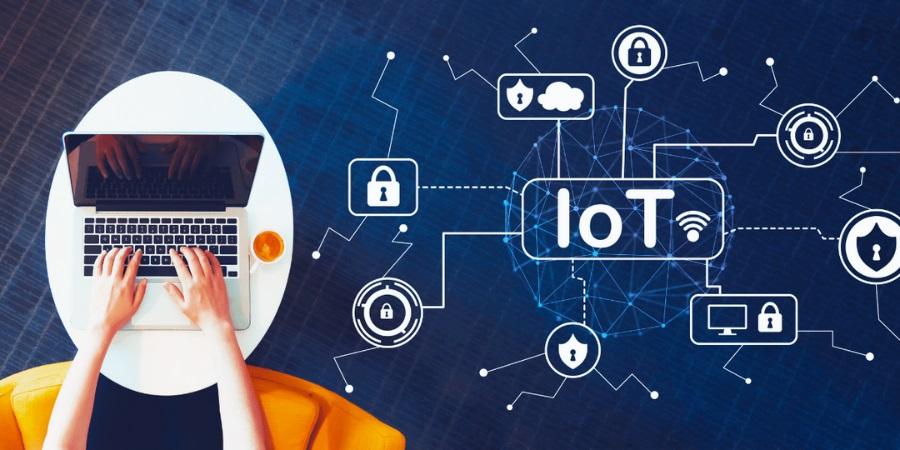
The IoT Industry is maturing as IoT deployments scale from consumer gadgets to critical enterprise and infrastructure systems. The industry includes device manufacturers, semiconductor suppliers, connectivity providers, IoT platforms, analytics vendors, and systems integrators. Growth is driven by demand for visibility, automation, and data-driven decision-making across homes, businesses, and cities. As the industry matures, security and lifecycle management have become central. IoT devices often remain deployed for many years, so updateability and support policies are critical. The industry is also shaped by interoperability challenges, as many protocols and ecosystems exist. Standards and open APIs are becoming more important for long-term flexibility. Edge computing is another industry direction, enabling local processing for resilience and latency. The industry increasingly converges with AI and digital twins, turning sensor data into predictive insights and automation. Regulatory scrutiny is increasing in some regions, pushing manufacturers to improve baseline security and transparency. Overall, the IoT industry is becoming more enterprise-grade, emphasizing governance, supportability, and measurable outcomes.
Industry dynamics emphasize platform ecosystems. Cloud providers influence the industry through IoT ingestion services, analytics, and AI tooling. Telecom operators influence it through connectivity, SIM management, and private networks. Device makers influence it through embedded security capabilities and hardware ecosystems. Systems integrators influence it through architecture and deployment services, often bridging OT and IT environments. The industry is increasingly solution-oriented. Instead of selling sensors, vendors package outcomes such as energy optimization, fleet tracking, or predictive maintenance. This increases demand for application layers and workflow integration. Data governance is becoming a core industry function, including standardized asset models and data quality controls. The industry also emphasizes device management: provisioning, OTA updates, monitoring, and decommissioning. Without lifecycle management, IoT becomes insecure and unreliable. Security practices are professionalizing, including certificate-based identity, secure boot, and signed firmware updates. Incident response and monitoring are also becoming part of IoT operations. These dynamics show that IoT is evolving into a long-term managed service layer, not a one-time deployment.
Challenges include fragmentation, cybersecurity risk, and proving ROI. Many IoT deployments stall at pilot stage because integration is complex and value is unclear. Data quality issues and inconsistent tagging undermine analytics. Cybersecurity incidents can destroy trust and lead to regulatory action. Devices may fail in harsh environments, requiring ruggedization and maintenance planning. Connectivity variability can cause data gaps, requiring buffering and edge processing. Privacy concerns can slow consumer adoption, especially for cameras and location tracking. The industry must also manage sustainability concerns, including battery waste and device recycling. Talent gaps exist in IoT engineering, security, and data operations. The industry responds with managed services, standardized platforms, and packaged solutions. Interoperability remains a major focus; open standards and APIs can reduce vendor lock-in and improve scalability. Another challenge is long-term support; devices must receive security updates for years, and many buyers now evaluate vendors on support commitments. These challenges push the industry toward more mature governance and operational models.
Industry outlook suggests continued expansion with stronger standards, security, and integration. Edge AI will increase, enabling local automation and reducing cloud costs. Private wireless networks will grow in industrial campuses and smart cities. Regulatory requirements may mandate better security baselines and update transparency. IoT will increasingly integrate with enterprise systems and digital twins, enabling predictive and prescriptive optimization. Sustainability requirements may push better energy monitoring and smarter resource use. Consolidation may occur as large vendors acquire specialized capabilities in device management or analytics. The IoT industry will be judged by its ability to deliver reliable, secure, interoperable systems that operate over long lifecycles. Providers that offer strong device lifecycle management, secure-by-design architectures, and measurable outcomes will lead. Over time, IoT will become a foundational infrastructure layer for modern automation and visibility across physical environments, supporting both operational efficiency and new digital services.
Other Exclusive Reports:
Virtual Security Appliance Market

 Arabic
 French
 Spanish
 Portuguese
 Deutsch
 Turkish
 Dutch
Dutch
 Italiano
 Russian
 Romaian
 Portuguese (Brazil)
 Greek
Greek